Premium Mold Release Agent for Polyurethane Foam - Superior Performance & Multi-Cycle Durability

All Categories

mold release agent for polyurethane foam

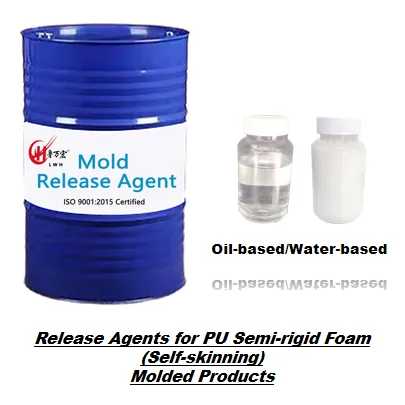
Mold release agent for polyurethane foam represents a specialized chemical solution designed to facilitate the smooth separation of cured polyurethane foam products from manufacturing molds and tooling surfaces. This essential manufacturing aid serves as a protective barrier between the reactive polyurethane foam formulation and the mold cavity, preventing unwanted adhesion while maintaining the integrity of both the finished product and the production equipment. The primary function of mold release agent for polyurethane foam involves creating an ultra-thin, non-reactive interface that allows manufacturers to achieve consistent part ejection without damaging delicate surface textures or compromising dimensional accuracy. Modern formulations incorporate advanced silicon-based compounds, fluoropolymers, and specialized surfactants that provide superior release properties while remaining chemically inert to polyurethane chemistry. These technological features ensure that the mold release agent for polyurethane foam maintains stability under varying temperature conditions and chemical environments typical of foam production processes. The application scope encompasses automotive seating, furniture cushioning, insulation panels, packaging materials, and specialty foam components across diverse industrial sectors. Manufacturing facilities rely on mold release agent for polyurethane foam to optimize production cycles, reduce waste, and maintain consistent quality standards. The agent typically applies through spray systems, brush application, or dip coating methods, depending on mold geometry and production requirements. Advanced formulations offer extended durability, allowing multiple part cycles before reapplication becomes necessary. Temperature resistance characteristics enable effective performance across the broad processing window required for different polyurethane foam densities and cure profiles. Environmental considerations have driven development of low-VOC and water-based mold release agent for polyurethane foam options that maintain performance while meeting increasingly stringent regulatory requirements.

New Product Releases

Mold release agent for polyurethane foam delivers significant production benefits that directly impact manufacturing efficiency and product quality. Cost reduction emerges as the primary advantage, as proper release agent application eliminates expensive mold damage caused by stuck parts and reduces the need for mechanical part extraction. Production facilities experience dramatic decreases in scrap rates when using quality mold release agent for polyurethane foam, as parts release cleanly without surface defects or dimensional distortion. Time savings accumulate throughout the manufacturing process, with faster cycle times resulting from smooth part ejection and reduced cleaning requirements between production runs. The mold release agent for polyurethane foam creates consistent surface finishes that meet aesthetic and functional specifications without requiring secondary finishing operations. Equipment longevity increases substantially when molds receive proper protection from reactive polyurethane adhesion, extending service life and reducing replacement costs. Operators benefit from simplified part handling procedures, as released parts maintain their intended shape and surface characteristics without manual intervention. Quality control becomes more predictable with mold release agent for polyurethane foam, as dimensional consistency improves when parts release without stress concentration or deformation. Production flexibility increases because the same molds can accommodate different foam formulations without extensive cleaning or preparation between changeovers. Worker safety improves through reduced exposure to mechanical extraction forces and sharp tools typically required for removing stuck parts. Environmental impact decreases as properly released parts generate less waste and require fewer harsh cleaning solvents for mold maintenance. The mold release agent for polyurethane foam enables automated production systems to operate reliably without manual intervention for stuck part removal. Temperature stability of modern formulations ensures consistent performance across seasonal variations and different production environments. Storage and handling simplicity makes mold release agent for polyurethane foam easy to integrate into existing manufacturing workflows without requiring specialized equipment or extensive training programs.

Tips And Tricks

Can Luwanhong Release Agent Ensure Better Surface Quality?

22

Sep

Can Luwanhong Release Agent Ensure Better Surface Quality?

Advanced Surface Quality Enhancement Through Industrial Release Agents The pursuit of perfect surface quality in manufacturing has long been a critical challenge across industries. Release agents play a fundamental role in achieving smooth, defect-fr...
View More
Top Advantages of Using Luwanhong Release Agent in Factories

22

Sep

Top Advantages of Using Luwanhong Release Agent in Factories

Transforming Industrial Production with Advanced Release Agents The manufacturing industry constantly seeks innovative solutions to enhance production efficiency and product quality. Among these solutions, Luwanhong release agent has emerged as a gam...
View More
How Luwanhong Release Agent Delivers Consistency and Reliability

27

Oct

How Luwanhong Release Agent Delivers Consistency and Reliability

Achieving Manufacturing Excellence Through Advanced Release Agents In the demanding world of industrial manufacturing, the quality and reliability of release agents play a pivotal role in production success. The Luwanhong release agent has emerged as...
View More
Why Is PU HR Release Agent Essential in Foam Production?

27

Oct

Why Is PU HR Release Agent Essential in Foam Production?

Understanding the Critical Role of Release Agents in Polyurethane Foam Manufacturing The polyurethane foam manufacturing industry has evolved significantly over the decades, and at its heart lies a crucial component that often goes unnoticed – ...
View More

Get a Free Quote

Our representative will contact you soon.
Email
Name
Company Name
Message
0/1000

mold release agent for polyurethane foam

Superior Chemical Resistance and Thermal Stability

Superior Chemical Resistance and Thermal Stability

The exceptional chemical resistance and thermal stability of mold release agent for polyurethane foam represents a breakthrough in manufacturing technology that addresses the most challenging aspects of foam production. This advanced formulation withstands the aggressive chemical environment created during polyurethane foam curing, including exposure to isocyanates, polyols, catalysts, and blowing agents without degradation or loss of release properties. The molecular structure incorporates specially engineered polymers that maintain integrity at elevated temperatures ranging from ambient conditions up to 200°C, ensuring reliable performance across all polyurethane foam processing conditions. Manufacturers benefit from this thermal stability because it eliminates the need for frequent reapplication during high-temperature cure cycles, reducing both material consumption and labor costs. The chemical resistance extends beyond basic polyurethane chemistry to include compatibility with flame retardants, colorants, fillers, and other additives commonly used in specialized foam formulations. This versatility allows a single mold release agent for polyurethane foam to serve multiple product lines without compromising performance or requiring inventory management of different release agent types. The stability characteristics prevent migration into the foam structure, maintaining the intended physical properties of the finished product while ensuring clean separation from the mold surface. Long-term exposure testing demonstrates that the mold release agent for polyurethane foam maintains effectiveness through hundreds of production cycles without building up residue or losing release efficiency. This durability translates directly into reduced production costs and improved manufacturing consistency. The formulation resists degradation from cleaning solvents and mold conditioning agents, allowing normal maintenance procedures without compromising subsequent release performance. Quality assurance benefits from this stability because part-to-part variation decreases when release conditions remain consistent throughout extended production runs.
Multi-Cycle Durability and Extended Performance

Multi-Cycle Durability and Extended Performance

Multi-cycle durability represents the cornerstone advantage of premium mold release agent for polyurethane foam, delivering sustained performance that transforms production economics and operational efficiency. Unlike conventional release agents that require reapplication after each molding cycle, advanced formulations provide reliable separation through multiple consecutive foam productions, significantly reducing material consumption and labor requirements. The molecular engineering behind this extended performance involves cross-linked surface films that rebuild and self-repair during the molding process, maintaining optimal release characteristics without accumulating thickness or creating surface defects. Manufacturers experience dramatic improvements in production throughput when using high-durability mold release agent for polyurethane foam, as elimination of frequent spray applications reduces cycle interruptions and maintains steady production flow. The extended performance characteristics prove particularly valuable in high-volume manufacturing environments where production schedules demand maximum uptime and minimal maintenance interventions. Testing protocols demonstrate that premium mold release agent for polyurethane foam maintains release effectiveness through 20 to 50 production cycles, depending on foam chemistry and processing conditions, compared to single-use alternatives that require constant reapplication. This durability advantage extends beyond mere convenience to encompass significant environmental benefits through reduced volatile organic compound emissions and decreased packaging waste. Production planning becomes more predictable when mold release agent for polyurethane foam provides consistent performance over extended periods, allowing manufacturers to optimize inventory management and reduce emergency supply requirements. The self-renewing properties of advanced formulations ensure that release performance actually improves through initial production cycles as the agent forms optimal interfacial characteristics with specific mold surfaces. Quality metrics show improved dimensional consistency and surface finish quality when using extended-performance mold release agent for polyurethane foam, as stable release conditions eliminate variables that contribute to part-to-part variation. Cost analysis reveals that multi-cycle durability reduces total release agent consumption by 60-80% compared to single-application products while delivering superior release performance and part quality.
Environmental Compliance and Worker Safety Features

Environmental Compliance and Worker Safety Features

Environmental compliance and worker safety represent critical considerations in modern manufacturing, making the development of eco-friendly mold release agent for polyurethane foam essential for responsible production operations. Contemporary formulations prioritize low volatile organic compound content, water-based chemistry, and biodegradable components that meet or exceed increasingly stringent environmental regulations without compromising release performance. The transition to environmentally compliant mold release agent for polyurethane foam eliminates concerns about air quality regulations and reduces the need for expensive ventilation systems and emission control equipment. Worker exposure risks decrease significantly with low-toxicity formulations that minimize inhalation hazards and skin contact concerns, creating safer working environments while maintaining production efficiency. Regulatory compliance becomes simplified when using certified mold release agent for polyurethane foam that meets OSHA, EPA, and international safety standards, reducing documentation requirements and inspection concerns. The environmental benefits extend throughout the product lifecycle, from manufacturing processes that generate fewer emissions to disposal procedures that pose minimal ecological impact. Advanced water-based mold release agent for polyurethane foam formulations deliver performance equivalent to traditional solvent-based products while eliminating fire hazards and reducing insurance costs associated with flammable material storage. Health and safety protocols become streamlined when using low-hazard mold release agent for polyurethane foam, as reduced personal protective equipment requirements and simplified handling procedures increase worker comfort and productivity. Waste stream management improves because environmentally compliant formulations generate less hazardous waste and simplify disposal procedures, reducing associated costs and regulatory burden. The sustainability profile of modern mold release agent for polyurethane foam includes renewable raw materials and manufacturing processes designed to minimize carbon footprint and resource consumption. Training requirements decrease when using safer formulations, as workers need less extensive hazmat training and can focus on production efficiency rather than safety precautions. Long-term cost benefits emerge from reduced liability exposure, lower insurance premiums, and decreased regulatory compliance costs when using certified safe mold release agent for polyurethane foam. Indoor air quality improvements create more comfortable working conditions and may reduce absenteeism and health-related productivity losses.

Get a Free Quote

Our representative will contact you soon.
Email
Name
Company Name
Message
0/1000