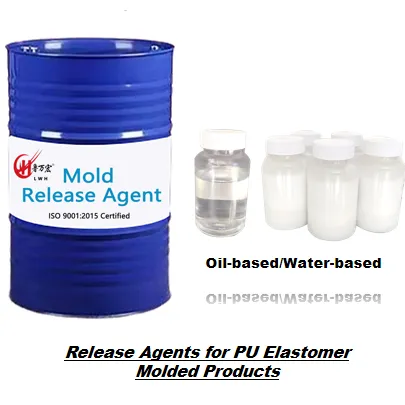
Premium Flexible Semi Rigid Self Skinning Foam Release Agent - Advanced Mold Release Technology for Superior Foam Production

All Categories

flexible semi rigid self skinning foam release agent

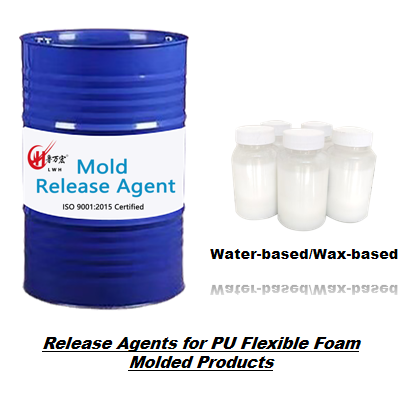
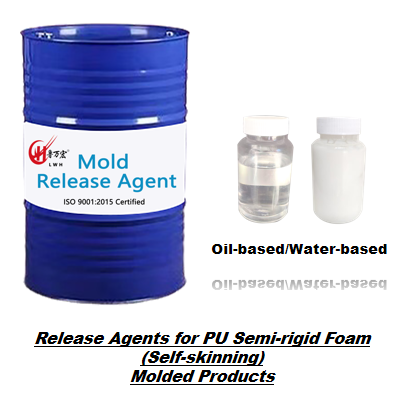
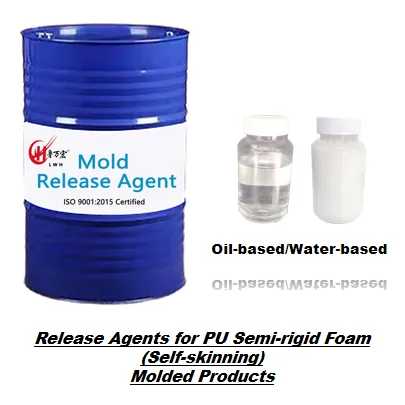
Flexible semi rigid self skinning foam release agent represents a cutting-edge solution designed to facilitate the seamless separation of polyurethane foam products from molds during manufacturing processes. This specialized chemical formulation serves as a crucial intermediary between the mold surface and the expanding foam, preventing adhesion while maintaining the integrity of both the final product and the production equipment. The flexible semi rigid self skinning foam release agent operates by creating a microscopic barrier layer that allows for effortless demolding without compromising surface quality or dimensional accuracy. The technological foundation of this flexible semi rigid self skinning foam release agent centers on advanced polymer chemistry that responds dynamically to the unique requirements of self-skinning foam applications. Unlike traditional release agents, this formulation adapts to the varying density gradients inherent in self-skinning foam systems, where the outer surface forms a dense protective skin while the core remains cellular and lightweight. The agent's molecular structure enables optimal performance across temperature ranges typically encountered in industrial foam production, maintaining stability during the exothermic reaction phase of polyurethane curing. Key applications for flexible semi rigid self skinning foam release agent span multiple industries including automotive seating, furniture manufacturing, architectural elements, and specialized industrial components. In automotive applications, this release agent ensures consistent production of dashboard components, armrests, and seating elements that require precise surface textures and dimensional tolerances. Furniture manufacturers rely on this technology for producing ergonomic seating surfaces and decorative elements that demand both aesthetic appeal and structural integrity. The agent's versatility extends to architectural applications where building components require weather resistance and thermal performance characteristics. Manufacturing facilities benefit from reduced cycle times, minimized waste, and enhanced productivity when implementing flexible semi rigid self skinning foam release agent systems, making it an indispensable component in modern polyurethane processing operations.

New Products

The primary advantage of flexible semi rigid self skinning foam release agent lies in its exceptional compatibility with complex mold geometries and intricate surface details. Traditional release systems often struggle with deep recesses, undercuts, and fine textural elements, leading to product defects or mold damage during demolding. This advanced formulation penetrates effectively into microscopic surface irregularities while maintaining uniform coverage across varying surface angles and orientations. Manufacturing teams experience significantly reduced rejection rates and improved first-pass quality metrics when utilizing this specialized release technology. The agent's superior thermal stability provides consistent performance throughout extended production runs, eliminating the need for frequent reapplication and minimizing production interruptions. This thermal resilience ensures that the release properties remain effective even during peak exothermic phases of the foam reaction, when temperatures can exceed standard operating ranges. Production managers appreciate the reduced maintenance requirements and extended equipment life cycles that result from using flexible semi rigid self skinning foam release agent formulations. Another compelling advantage centers on the agent's minimal impact on foam adhesion properties in multi-layer applications. Many production processes require subsequent bonding or lamination steps, and conventional release agents can create surface contamination that interferes with adhesive performance. This innovative formulation maintains clean release characteristics while preserving the chemical compatibility necessary for downstream assembly operations. Quality control teams report improved bond strength consistency and reduced adhesive failure rates in applications where flexible semi rigid self skinning foam release agent technology has been implemented. The environmental benefits of this release system contribute significantly to sustainable manufacturing practices. The formulation reduces volatile organic compound emissions compared to solvent-based alternatives, supporting cleaner workplace environments and regulatory compliance objectives. Waste reduction occurs through improved yield rates and decreased rework requirements, while the agent's efficient application characteristics minimize material consumption per production cycle. Cost-effectiveness emerges through multiple operational improvements including reduced labor requirements for mold cleaning and preparation, decreased downtime for maintenance activities, and extended service intervals for production equipment. These economic advantages make flexible semi rigid self skinning foam release agent an attractive investment for manufacturing facilities seeking to optimize their polyurethane processing capabilities while maintaining competitive production costs and superior product quality standards.

Tips And Tricks

How to Use FRP Release Agents for Cleaner Mold Separation?

27

Aug

How to Use FRP Release Agents for Cleaner Mold Separation?

Mastering the Art of FRP Release Agents In the world of composite manufacturing, achieving clean and efficient mold separation is crucial for producing high-quality FRP (Fiber Reinforced Plastic) parts. FRP release agents play a vital role in this pr...
View More
Can Luwanhong Release Agent Ensure Better Surface Quality?

22

Sep

Can Luwanhong Release Agent Ensure Better Surface Quality?

Advanced Surface Quality Enhancement Through Industrial Release Agents The pursuit of perfect surface quality in manufacturing has long been a critical challenge across industries. Release agents play a fundamental role in achieving smooth, defect-fr...
View More
Can Oil Based Release Agent Ensure Smooth and Clean Releases?

22

Sep

Can Oil Based Release Agent Ensure Smooth and Clean Releases?

Understanding the Power of Oil Based Release Agents in Modern Construction The construction industry constantly seeks innovative solutions to enhance efficiency and quality in concrete work. Oil based release agents have emerged as a vital component ...
View More
How Does PU HR Release Agent Improve Mold Performance?

27

Oct

How Does PU HR Release Agent Improve Mold Performance?

Maximizing Industrial Mold Efficiency with Advanced Release Agents The manufacturing industry continually seeks innovative solutions to enhance production efficiency and product quality. Among these advancements, PU HR release agent has emerged as a ...
View More

Get a Free Quote

Our representative will contact you soon.
Email
Name
Company Name
Message
0/1000

flexible semi rigid self skinning foam release agent

Advanced Surface Interaction Technology

Advanced Surface Interaction Technology

The revolutionary surface interaction technology embedded within flexible semi rigid self skinning foam release agent fundamentally transforms the relationship between mold surfaces and expanding polyurethane foam systems. This sophisticated mechanism operates through controlled molecular orientation that creates an optimal balance between release effectiveness and surface quality preservation. Unlike conventional release agents that rely solely on creating a barrier layer, this advanced formulation actively manages the interfacial chemistry between the mold and the curing foam material. The technology responds dynamically to the changing viscosity and reactivity profiles characteristic of self-skinning foam systems, adjusting its release properties in real-time as the foam transitions from liquid to semi-solid to fully cured states. This adaptive behavior ensures consistent performance regardless of variations in ambient temperature, humidity, or processing conditions that might otherwise compromise release effectiveness. Manufacturing engineers particularly value this technology's ability to maintain uniform release characteristics across complex mold surfaces featuring varying thermal conductivity zones, deep draw sections, and intricate geometric details. The system's molecular design incorporates specialized functional groups that provide selective affinity for different substrate materials, enabling optimized performance on aluminum, steel, composite, and specialty mold surfaces commonly used in polyurethane processing applications. Quality assurance teams consistently report improved surface finish characteristics and dimensional stability in products manufactured using this advanced flexible semi rigid self skinning foam release agent technology. The reduction in surface defects such as flow marks, sink marks, and texture irregularities contributes directly to enhanced product aesthetics and functional performance. Additionally, the technology's ability to prevent microscopic foam infiltration into mold surface irregularities significantly extends tool life and reduces maintenance requirements. Production facilities implementing this surface interaction technology experience measurable improvements in overall equipment effectiveness metrics, with particular gains in availability and quality rate indicators. The system's compatibility with automated application equipment further enhances its value proposition by enabling precise, repeatable application patterns that optimize material usage while ensuring comprehensive mold coverage for consistent release performance across all production cycles.
Multi-Density Foam Compatibility

Multi-Density Foam Compatibility

The exceptional multi-density foam compatibility of flexible semi rigid self skinning foam release agent addresses one of the most challenging aspects of modern polyurethane foam manufacturing. Self-skinning foam systems create products with dramatically varying density profiles, ranging from dense, non-porous surface layers exceeding 800 kg/m³ to lightweight core materials as low as 50 kg/m³. This density variation occurs within the same component and presents unique challenges for release agent performance, as different foam densities exhibit varying adhesion characteristics, thermal properties, and chemical reactivity profiles. The specialized formulation of this release agent incorporates multiple active components that respond selectively to these different density zones, ensuring optimal release performance throughout the entire foam structure. Engineering teams working with complex foam geometries particularly appreciate how this compatibility extends to gradient foam systems where density transitions occur gradually rather than in discrete layers. The agent's molecular architecture includes both hydrophilic and hydrophobic segments that provide balanced interaction with the varying chemical compositions found in different foam density regions. This balanced approach prevents the common problems of inadequate release in high-density areas or surface contamination in low-density zones that plague conventional release systems. Production managers report significant improvements in yield rates and quality consistency when processing foam components with complex density profiles using this specialized flexible semi rigid self skinning foam release agent technology. The formulation's stability under the varying thermal conditions generated by different density regions ensures consistent performance throughout the curing cycle. High-density surface layers generate more exothermic heat during curing, while low-density core regions may experience different temperature profiles due to reduced thermal mass and altered reaction kinetics. This temperature variation can cause conventional release agents to decompose, migrate, or lose effectiveness in localized areas. The multi-density compatibility feature maintains uniform release properties across these thermal gradients, preventing localized adhesion problems that can result in product damage or mold fouling. Manufacturing facilities processing automotive seating components, furniture cushioning, and architectural foam elements rely on this compatibility to achieve consistent production outcomes across varying product specifications and foam formulations. The technology's adaptability to different polyol and isocyanate systems further enhances its versatility in multi-product manufacturing environments where flexible semi rigid self skinning foam release agent performance must remain consistent across diverse foam chemistry platforms and processing requirements.
Extended Mold Life and Reduced Maintenance

Extended Mold Life and Reduced Maintenance

The extended mold life and reduced maintenance capabilities of flexible semi rigid self skinning foam release agent deliver substantial economic and operational benefits that significantly impact manufacturing efficiency and cost-effectiveness. Conventional release systems often contribute to accelerated mold wear through inadequate protection against chemical attack, thermal cycling stress, and mechanical abrasion during demolding operations. This advanced formulation incorporates protective compounds that form a sacrificial barrier layer, shielding expensive mold surfaces from the aggressive chemical environment present during polyurethane foam curing reactions. The protective mechanism operates through multiple complementary pathways, including neutralization of acidic by-products, thermal stress distribution, and lubrication of metal-to-foam contact interfaces. Mold maintenance personnel consistently report dramatic reductions in surface pitting, corrosion, and wear patterns when facilities transition to this specialized flexible semi rigid self skinning foam release agent system. The economic impact of extended mold life becomes particularly significant for high-volume production operations where tooling represents a substantial capital investment. Manufacturing facilities processing thousands of foam components monthly experience measurable improvements in tool depreciation rates and reduced frequency of reconditioning cycles. The agent's ability to prevent foam infiltration into microscopic surface irregularities eliminates the progressive surface roughening that typically occurs with repeated production cycles using conventional release systems. This surface preservation translates directly to maintained product quality standards throughout extended production runs, reducing the need for mold refurbishment or replacement due to surface degradation. Maintenance scheduling benefits significantly from the reduced cleaning requirements associated with this advanced release technology. Traditional systems often require extensive mold cleaning between production cycles to remove residual foam deposits and release agent buildup. The clean-releasing characteristics of flexible semi rigid self skinning foam release agent minimize these maintenance intervals, allowing for extended production runs without quality degradation. Facility managers report improvements in overall equipment effectiveness through increased available production time and reduced unplanned maintenance activities. The formulation's thermal stability contributes to mold longevity by maintaining effective protection throughout temperature cycling inherent in production operations. Thermal expansion and contraction cycles can compromise conventional release agent coverage, leading to localized protection failures and accelerated wear patterns. This specialized system maintains uniform coverage and protection characteristics across operating temperature ranges, ensuring consistent mold protection throughout varying production conditions. Quality control teams observe improved dimensional stability and surface finish consistency in products manufactured using molds protected by this flexible semi rigid self skinning foam release agent technology, indicating maintained tool precision throughout extended service intervals.

Get a Free Quote

Our representative will contact you soon.
Email
Name
Company Name
Message
0/1000