
 EN
EN
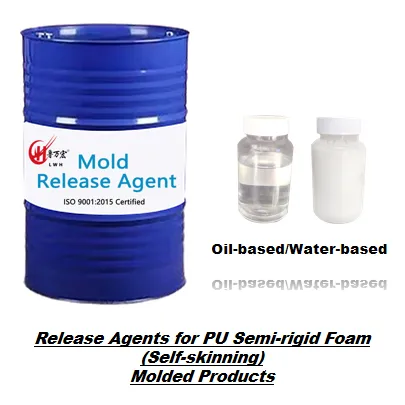
In the world of polyurethane foam manufacturing, achieving flawless surface quality remains one of the most critical challenges faced by industrial producers. The quality of the final product's skin directly impacts both aesthetic appeal and functional performance, making surface excellence a non-negotiable requirement in competitive markets. Release agents for PU foam play a pivotal role in determining whether manufacturers achieve the smooth, defect-free surfaces that customers demand or encounter costly quality issues that compromise product integrity.
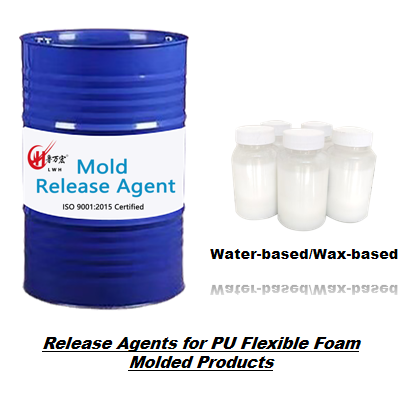
The relationship between release agents and surface quality extends far beyond simple mold release functionality. Modern manufacturing demands require sophisticated understanding of how different release agent formulations interact with polyurethane chemistry during the curing process. Temperature variations, humidity levels, and application techniques all contribute to the final surface characteristics, creating a complex matrix of variables that skilled technicians must navigate to achieve consistent results.
Professional foam manufacturers recognize that surface defects can arise from multiple sources, but improper release agent selection ranks among the most preventable causes of quality failures. Manufacturers who invest in premium release agents for PU foam applications typically experience significant improvements in both surface quality and overall production efficiency, reducing waste and enhancing customer satisfaction.
Understanding PU Foam Surface Quality Requirements
Critical Surface Characteristics
Surface quality in polyurethane foam manufacturing encompasses several measurable characteristics that directly impact product performance and customer acceptance. Smoothness represents the primary visual indicator, with high-quality surfaces exhibiting minimal texture variations and consistent gloss levels across the entire molded surface. Release agents for PU foam must facilitate the formation of these smooth surfaces while preventing common defects such as orange peel texture, swirl marks, or microscopic irregularities that become visible under certain lighting conditions.
Color consistency presents another crucial aspect of surface quality that manufacturers must carefully control throughout the production process. Premium release agents maintain neutral chemical profiles that avoid interference with pigment systems, ensuring that color matching remains accurate from the first part to the final production run. Temperature stability of the release agent formulation becomes particularly important when dealing with colored foam applications, as thermal variations can create subtle but noticeable color shifts that compromise aesthetic standards.
Dimensional accuracy and edge definition also depend heavily on proper release agent performance, as inadequate lubrication can cause foam adhesion that results in torn edges or dimensional distortions when parts are removed from molds. Release agents for PU foam applications must provide sufficient lubrication to ensure clean part separation while maintaining the precise dimensional tolerances required for assembly operations or aesthetic applications.
Industry Standards and Specifications
Automotive and furniture industries have established rigorous standards for polyurethane foam surface quality that manufacturers must meet to secure contracts and maintain competitive positioning. These specifications often include detailed requirements for surface roughness measurements, gloss level uniformity, and defect-free zones that must be maintained across large surface areas. Release agents for PU foam must support compliance with these stringent requirements while providing consistent performance across varying production conditions.
Quality control protocols in professional manufacturing environments typically involve multiple inspection points where surface characteristics are evaluated against predetermined standards. Visual inspection techniques combined with instrumental measurements help identify trends in surface quality that may indicate the need for release agent adjustments or application parameter modifications. Successful manufacturers develop comprehensive quality systems that monitor release agent performance as an integral component of overall surface quality management.
International standards organizations continue to refine specifications for foam surface quality, reflecting evolving customer expectations and improved manufacturing capabilities. Release agents for PU foam must evolve accordingly, incorporating advanced formulation technologies that support compliance with these increasingly demanding requirements while maintaining cost-effective production economics.
Chemical Interaction Mechanisms
Release Agent Chemistry Fundamentals
The molecular structure of release agents directly influences their interaction with polyurethane chemistry during the foam formation and curing process. Silicone-based release agents offer excellent thermal stability and low surface energy characteristics that promote effective mold release, but their interaction with urethane linkages must be carefully controlled to prevent surface contamination or adhesion issues in downstream assembly operations. Release agents for PU foam applications require precise molecular weight distributions and functional group selections to achieve optimal performance without compromising surface quality.
Wax-based release systems provide alternative chemistry options that offer excellent compatibility with polyurethane systems while delivering superior surface finish characteristics in many applications. These formulations typically incorporate carefully selected hydrocarbon chains and polar functional groups that create effective barrier layers without interfering with the foam's cellular structure development. Understanding the interaction between wax molecules and isocyanate groups helps manufacturers optimize application parameters for consistent surface quality results.
Water-based release agent formulations have gained popularity due to environmental considerations and improved workplace safety profiles, but their performance characteristics require different optimization approaches compared to solvent-based systems. Release agents for PU foam in water-based formulations must overcome challenges related to film formation, thermal stability, and interaction with moisture-sensitive polyurethane chemistry while maintaining the surface quality standards demanded by modern manufacturing applications.
Surface Formation Dynamics
The formation of high-quality foam surfaces involves complex thermodynamic processes that begin the moment polyurethane components contact the release agent film on mold surfaces. Heat generation during the exothermic polymerization reaction creates temperature gradients that influence release agent behavior, potentially affecting film continuity and lubrication effectiveness. Release agents for PU foam must maintain stable performance characteristics throughout these thermal cycles to ensure consistent surface quality from part to part.
Foam expansion dynamics create additional complexity in surface formation, as the growing cellular structure exerts mechanical forces against mold surfaces that must be accommodated by the release agent film. Proper film thickness and mechanical properties become critical factors in preventing foam adhesion while maintaining the smooth surface characteristics required for high-quality applications. Advanced release agent formulations incorporate rheological modifiers that optimize film behavior under these dynamic conditions.
Cooling and demolding phases present final opportunities for surface quality optimization or degradation, depending on release agent performance during these critical stages. Release agents for PU foam applications must provide adequate lubrication during part removal while avoiding residue transfer that could affect subsequent painting, adhesive bonding, or other finishing operations required for complete product assembly.
Application Techniques and Best Practices
Spray Application Methods
Professional spray application of release agents requires careful attention to multiple variables that directly impact surface quality outcomes. Spray pressure settings must be optimized to achieve uniform film thickness across complex mold geometries while avoiding overspray that can create uneven coverage or contaminate adjacent mold surfaces. Release agents for PU foam applications typically perform best when applied at moderate pressures that promote good atomization without creating excessive bounce-back or drift that wastes material and compromises application consistency.
Nozzle selection and maintenance play crucial roles in achieving consistent spray patterns that support uniform surface quality across production runs. Worn or improperly sized nozzles can create streaking, uneven coverage, or excessive material consumption that increases costs while potentially degrading surface quality. Regular nozzle inspection and replacement schedules help maintain optimal application performance and ensure that release agents for PU foam deliver their intended surface quality benefits.
Environmental control during spray application becomes particularly important when working with temperature-sensitive formulations or in facilities with variable ambient conditions. Humidity levels, air circulation patterns, and temperature variations all influence drying characteristics and film formation properties that ultimately affect surface quality outcomes. Successful manufacturers develop comprehensive environmental monitoring protocols that optimize conditions for consistent release agent performance.
Brushing and Wiping Techniques
Manual application methods offer advantages in certain production scenarios, particularly when dealing with complex mold geometries or low-volume specialty applications where spray systems may not be cost-effective. Brush application of release agents for PU foam requires specific techniques that ensure uniform coverage while avoiding brush marks or texture variations that could transfer to the foam surface. High-quality brushes with appropriate bristle materials help achieve smooth, consistent films that support excellent surface quality outcomes.
Wiping techniques using lint-free cloths or specialized applicators provide another option for release agent application in situations requiring precise control or minimal material usage. These methods work particularly well for touch-up applications or when working with premium release agents that deliver excellent performance at minimal film thickness levels. Proper wiping techniques help eliminate excess material while ensuring adequate coverage for effective mold release and surface quality protection.
Training programs for application personnel should emphasize the critical relationship between technique consistency and surface quality outcomes, as variations in manual application methods can create quality issues that are difficult to identify and correct. Release agents for PU foam perform best when applied by trained technicians who understand the importance of consistent technique and proper material handling throughout the application process.
Temperature and Environmental Factors
Thermal Management Considerations
Temperature control throughout the molding process significantly impacts both release agent performance and final surface quality characteristics. Mold temperatures must be carefully managed to ensure proper release agent film formation while supporting optimal polyurethane curing conditions. Release agents for PU foam typically exhibit temperature-dependent viscosity changes that affect application characteristics and film properties, requiring adjustment of application parameters when working across different thermal conditions.
Preheating protocols help optimize release agent performance by ensuring proper film development before polyurethane injection begins. Insufficient preheating can result in poor film formation or inadequate mold coverage, while excessive temperatures may cause film degradation or premature curing that compromises release effectiveness. Establishing appropriate temperature profiles for specific release agent formulations helps maintain consistent surface quality across varying production conditions.
Cooling rate management during the demolding phase affects both part dimensional stability and surface quality characteristics. Rapid cooling can create thermal stresses that may cause surface defects or dimensional distortions, particularly when release agent films lack adequate flexibility to accommodate thermal contraction. Release agents for PU foam applications should maintain effective lubrication properties throughout controlled cooling cycles to ensure optimal surface quality outcomes.
Humidity and Atmospheric Controls
Humidity levels in production environments create significant challenges for release agent performance, particularly when working with water-sensitive formulations or hygroscopic polyurethane systems. High humidity can interfere with proper film formation and curing characteristics, while extremely low humidity may cause rapid solvent evaporation that prevents adequate film leveling. Maintaining optimal humidity ranges helps ensure consistent performance from release agents for PU foam applications across seasonal variations and geographic locations.
Air circulation patterns within production facilities influence solvent evaporation rates and film formation characteristics that directly impact surface quality outcomes. Proper ventilation design should provide adequate air movement to support solvent removal while avoiding excessive air velocities that could cause uneven drying or contamination issues. Balanced air circulation helps optimize release agent performance while maintaining acceptable workplace environments for production personnel.
Atmospheric pressure variations, though less obvious than temperature and humidity effects, can influence foam expansion characteristics and surface formation dynamics. Release agents for PU foam must maintain consistent performance across atmospheric pressure ranges encountered in different geographic locations or weather conditions to ensure reliable surface quality outcomes regardless of environmental variations.
Common Surface Quality Issues
Defect Identification and Analysis
Surface defects in polyurethane foam products often manifest as visible irregularities that compromise both aesthetic appeal and functional performance characteristics. Orange peel texture represents one of the most common quality issues, typically resulting from improper release agent application or incompatible formulation chemistry that interferes with smooth surface formation. Release agents for PU foam must be carefully selected and applied to minimize texture variations while supporting consistent surface smoothness across large molded areas.
Swirl marks and directional patterns frequently appear when release agents are applied with inconsistent technique or when application equipment creates uneven film distribution. These defects become particularly noticeable on high-gloss surfaces or when parts are viewed under directional lighting conditions common in automotive and furniture applications. Identifying the root causes of swirl patterns helps manufacturers optimize their release agent application processes for improved surface quality consistency.
Color variations and contamination issues can arise from release agent formulations that contain reactive components or impurities that interfere with polyurethane chemistry. These problems may not become apparent until parts undergo additional processing steps such as painting or adhesive bonding, making early detection and prevention particularly important. Release agents for PU foam applications should undergo thorough compatibility testing to ensure they maintain neutral profiles that support consistent color and surface chemistry characteristics.
Prevention and Mitigation Strategies
Preventive maintenance programs for application equipment help minimize surface quality issues by ensuring consistent release agent delivery and distribution characteristics. Regular cleaning schedules remove accumulated contaminants that could cause film defects, while calibration procedures maintain optimal spray patterns and application rates. Proper equipment maintenance supports reliable performance from release agents for PU foam applications while reducing the likelihood of quality issues that require costly rework or part rejection.
Process monitoring systems that track key parameters such as application thickness, coverage uniformity, and environmental conditions help identify trends that may lead to surface quality problems before they become widespread production issues. Statistical process control techniques applied to release agent performance data enable proactive adjustments that maintain optimal surface quality while minimizing material waste and production disruptions.
Quality feedback systems that connect surface quality outcomes with specific release agent batches and application parameters help manufacturers develop comprehensive understanding of the factors that influence their particular production environment. This knowledge enables continuous improvement in both release agent selection and application techniques, leading to enhanced surface quality consistency and reduced quality-related costs over time.
FAQ
How do release agents specifically impact the surface texture of PU foam products
Release agents for PU foam directly influence surface texture through their film-forming properties and interaction with the expanding foam during the molding process. High-quality release agents create smooth, uniform barrier layers that allow the foam to develop consistent surface characteristics without adhesion to mold surfaces. Poor-quality or improperly applied release agents can create texture variations, orange peel effects, or transfer patterns that compromise the final surface quality. The molecular structure and application technique of the release agent determine whether the foam achieves the smooth, professional finish required for high-end applications.
What are the most common surface defects caused by inadequate release agent performance
The most frequent surface defects include orange peel texture from uneven film formation, swirl marks from inconsistent application technique, and adhesion spots where insufficient lubrication causes foam to stick to mold surfaces. Color variations can occur when release agents interfere with pigment systems, while contamination issues may arise from reactive components in low-quality formulations. Release agents for PU foam applications must be selected and applied carefully to prevent these defects, as they often become apparent only after parts have been removed from molds and may require costly rework or complete part replacement to correct.
How should application parameters be adjusted for optimal surface quality results
Optimal surface quality requires careful coordination of spray pressure, application thickness, and environmental conditions to ensure uniform release agent coverage without overspray or contamination. Film thickness should be minimized while maintaining adequate lubrication, typically achieved through multiple light coats rather than single heavy applications. Temperature and humidity control during application and curing phases helps ensure proper film formation and maintains consistent performance from release agents for PU foam across varying production conditions. Regular monitoring and adjustment of these parameters based on surface quality feedback helps maintain optimal results.
What testing methods help evaluate release agent impact on surface quality
Surface quality evaluation should include both visual inspection under controlled lighting conditions and instrumental measurements of gloss, roughness, and color consistency across representative sample areas. Adhesion testing using standardized tape tests or pull-off measurements helps verify that release agents for PU foam provide adequate mold release without leaving residues that could interfere with subsequent finishing operations. Long-term aging studies under accelerated conditions help predict how surface quality may change over time, while compatibility testing with paints, adhesives, and other finishing materials ensures that release agent selection supports complete product manufacturing requirements.
Table of Contents
- Understanding PU Foam Surface Quality Requirements
- Chemical Interaction Mechanisms
- Application Techniques and Best Practices
- Temperature and Environmental Factors
- Common Surface Quality Issues
-
FAQ
- How do release agents specifically impact the surface texture of PU foam products
- What are the most common surface defects caused by inadequate release agent performance
- How should application parameters be adjusted for optimal surface quality results
- What testing methods help evaluate release agent impact on surface quality